

Choosing between RedMagic 11 Air vs Asus ROG Phone 9 Pro is really a budget versus max-power decision. The RedMagic 11 Air comes in way cheaper (it starts at $499) while still giving you a big 7,000 mAh battery, a 144Hz AMOLED screen, and Snapdragon 8 Elite performance. The ROG Phone 9 Pro costs far more, but you’re paying for the top-tier experience and extras built for serious play.
If you want the quick answer, the ROG Phone 9 Pro is better if you’re chasing the best performance and premium add-ons. On the other hand, the RedMagic 11 Air is the better buy if you want strong gaming specs without flagship pricing.
Next, you’ll get a clear breakdown across specifications (with a table), design and build quality, display quality, performance, battery life and charging, software and ecosystem, connectivity, cameras and audio, extra features, price and value, who each phone fits, and a final verdict.
RELATED: RedMagic 11 Air vs RedMagic 10 Air: Is it worth Upgrading?
Quick Summary
Here’s the decision in plain English:
- Price gap: RedMagic 11 Air starts at $499, while the ROG Phone 9 Pro is usually $1,199+ in the US depending on configuration (and can go higher). For a quick price perspective, see this price-focused comparison breakdown.
- Battery size: RedMagic goes big with 7,000 mAh, Asus uses 5,800 mAh.
- Charging style: RedMagic sticks to 80W wired and skips wireless charging, Asus does 65W wired and 15W wireless.
- Display vibe: RedMagic gives you a true full-screen look via an under-display selfie camera at 144Hz, Asus goes 165Hz normally with an optional 185Hz mode in gaming tools.
- Camera ambition: RedMagic keeps it basic (dual rear cameras), Asus adds a real telephoto lens for optical zoom.
- Feel in hand: RedMagic is lighter at 207g, Asus is heavier at 227g.
Winner: Tie Your winner depends on whether you care more about cost and battery, or premium extras and camera flexibility.
Specifications
This table sticks to what’s stated in the provided source material.
| Spec | RedMagic 11 Air | Asus ROG Phone 9 Pro |
|---|---|---|
| Release timing (per sources) | January 2026 | November 2024 |
| Starting US price (MSRP) | $499 (12GB/256GB) | $1,199.99 (before tax) |
| Higher config pricing (from sources) | $599 (16GB/512GB), US pricing can vary | $1,499.99 (before tax) for 24GB/1TB (Pro Edition) |
| Chipset | Snapdragon 8 Elite | Snapdragon 8 Elite |
| RAM and storage | 12GB/256GB, 16GB/512GB (UFS 4.1) | Up to 24GB RAM, up to 1TB storage (UFS 4.0) |
| Display | 6.85-inch AMOLED, 2688 x 1216, 144Hz, about 1,800 nits peak | 6.78-inch AMOLED, 2400 x 1080, 165Hz (185Hz in Game Genie), up to 2,500 nits peak |
| Battery | 7,000 mAh | 5,800 mAh |
| Charging | 80W wired, no wireless | 65W wired, 15W wireless |
| Rear cameras | 50MP main (OIS) + 8MP ultrawide | 50MP main + 32MP 3x telephoto + 13MP ultrawide |
| Front camera | 16MP under-display | 32MP |
| Notable hardware extras | Built-in active cooling fan | 3.5mm headphone jack, dual USB-C ports, AniMe Vision LEDs on some models |
For gaming, the specs that matter most are the chip, the cooling plan, and how you’ll charge while playing. Specs also hide a lot, especially throttling and comfort during long sessions.
Winner: Tie Both look stacked on paper, but specs alone won’t reveal sustained GPU performance, camera tuning, or hand fatigue.
Design & Build Quality
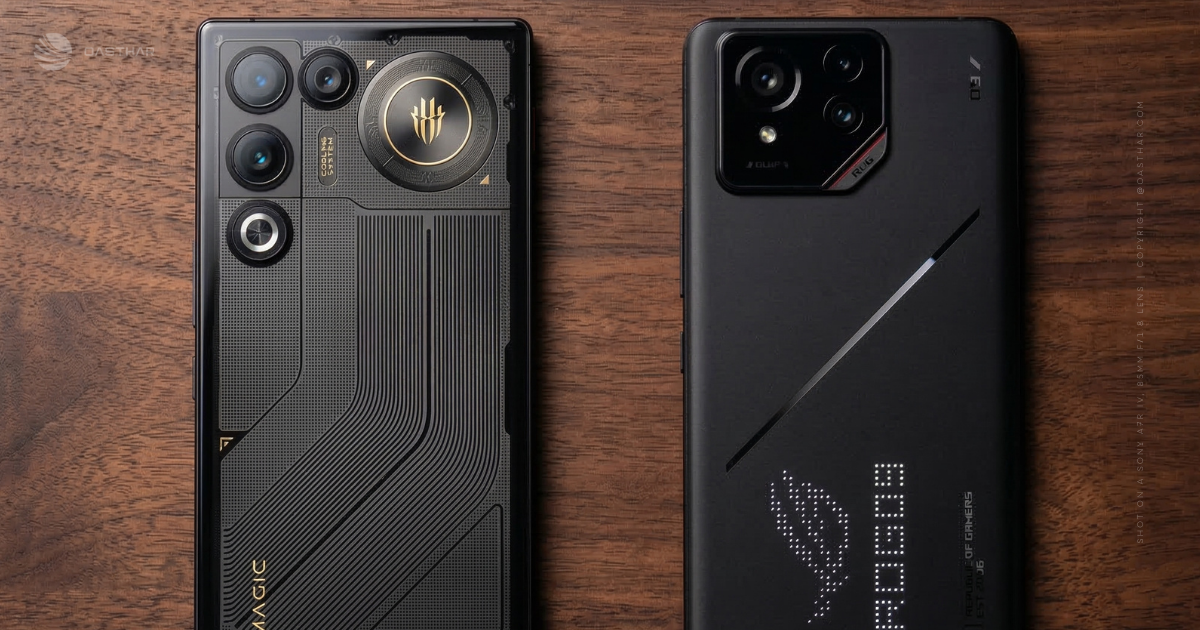
The RedMagic 11 Air is the slimmer-feeling phone at 8 mm thick and 207g. You also get a transparent-styled back with a visible vent, plus an active fan design meant to keep heat moving. In long sessions, that lighter weight helps, especially if you play shooters with shoulder triggers.
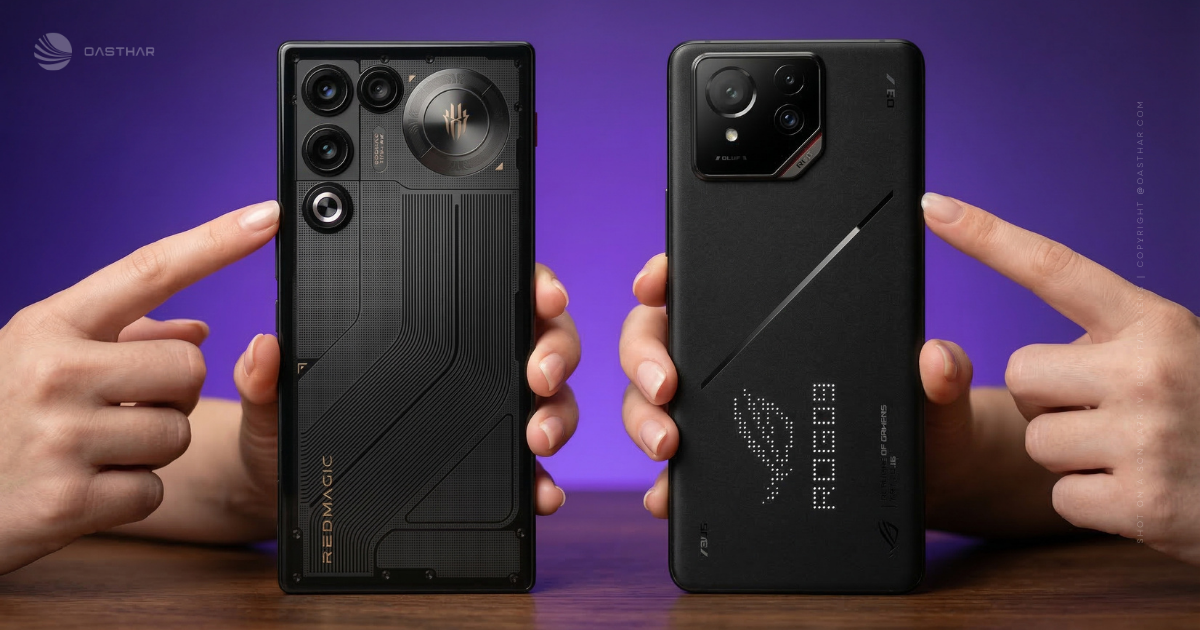
Asus takes the opposite approach. The ROG Phone 9 Pro sits at 227g and 8.9 mm thick, and it leans into an understated matte look. It also bakes in little gamer touches like an AniMe Vision LED matrix on some models, while keeping the branding more subtle than older ROG phones.
If you want a deeper read on the RedMagic build choices and how the phone holds up day to day, this RedMagic 11 Air review is a helpful companion.
Winner: Asus ROG Phone 9 Pro It feels more premium in materials and finish, which tends to pay off when you use it as your only phone.
Display Quality
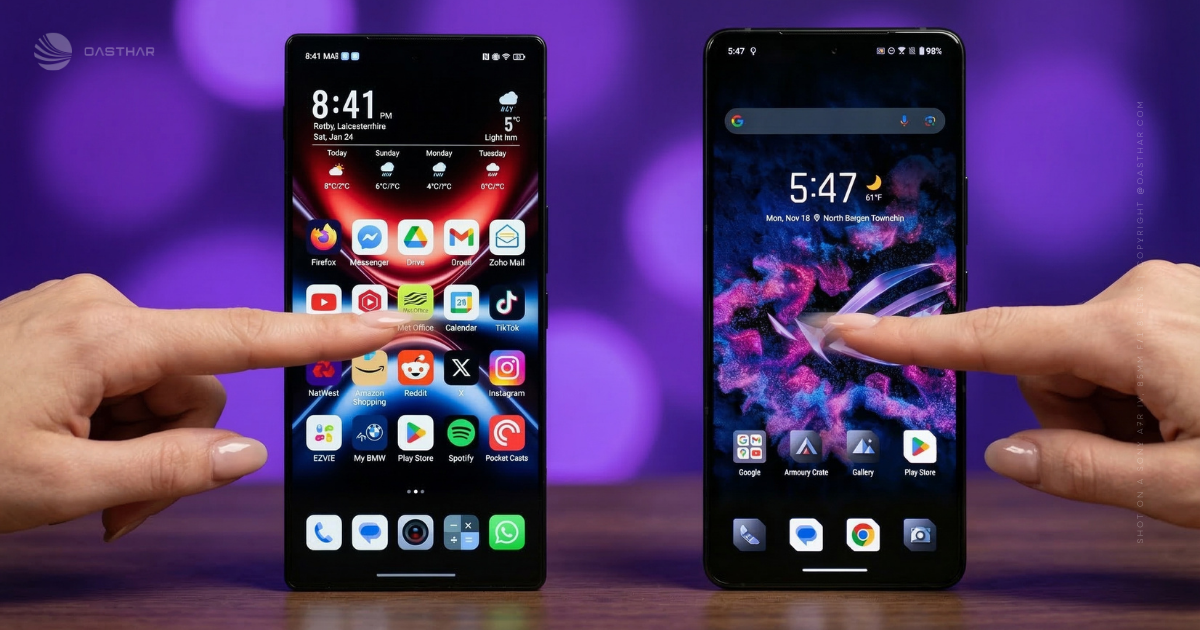
RedMagic’s display is built for immersion. You get a 6.85-inch 144Hz AMOLED with uniform bezels and an under-display selfie camera, so there’s no punch-hole breaking up the view. That matters more than you’d think when your HUD sits near the top edge. The trade-off is front camera quality, because under-display selfies tend to look softer.
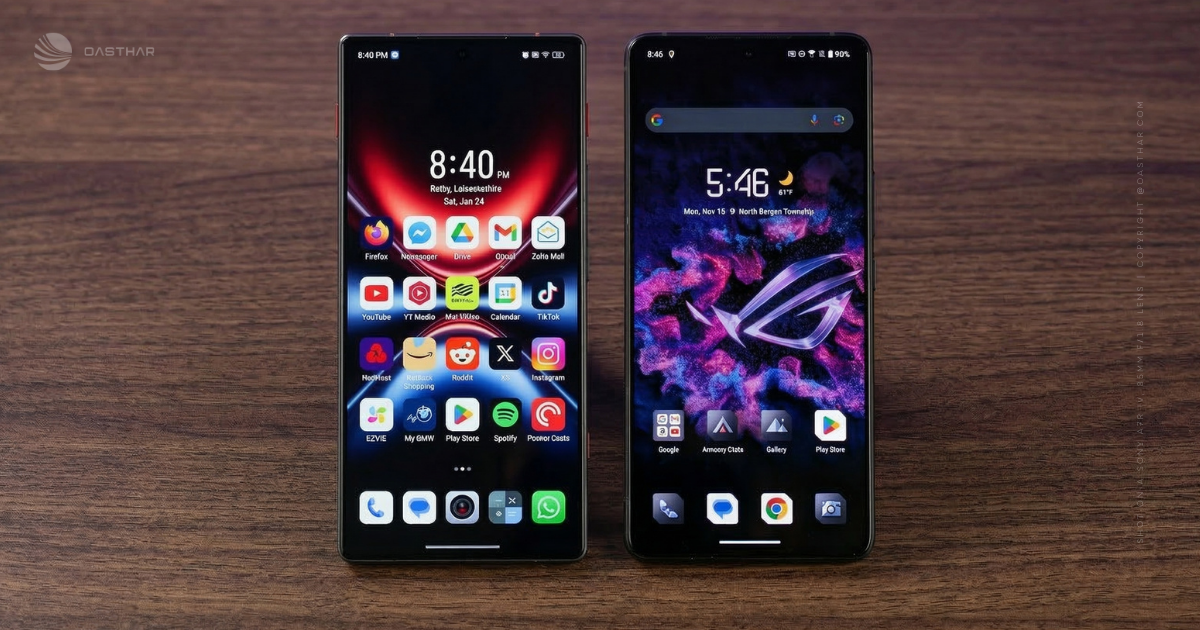
Brightness is strong where it counts for outdoor use (around 1,800 nits peak in testing), but the phone’s minimum brightness is not as low as top mainstream flagships, so late-night scrolling can feel brighter than you want.
Asus brings a different kind of win. The ROG Phone 9 Pro is specced at up to 2,500 nits peak and supports 165Hz general use, with an 185Hz option inside its game tools. It also uses a standard front camera cutout.
Winner: Asus ROG Phone 9 Pro You get higher peak brightness and more refresh options across mixed use, not just games.
Performance
Both phones run the Snapdragon 8 Elite, so short bursts feel fast on either. App loads snap, UI feels responsive, and high refresh rates make everything look quicker.
The real split shows up after 15 to 30 minutes of heavy GPU load. In PhoneArena’s testing notes, the RedMagic 11 Air can throttle a lot under sustained load, likely because the body is thinner and it lacks the more advanced cooling approaches seen in thicker gaming phones. You still get a built-in fan, but size limits how much heat you can dump over time.
Asus focuses hard on sustained play. The ROG Phone 9 Pro has multiple performance modes and can pair with an external fan accessory on higher bundles, which helps it keep performance steadier in long sessions. For broader context on how these gaming phones compare in overall positioning, you can reference this ROG Phone 9 Pro versus-style roundup.
Winner: Asus ROG Phone 9 Pro Its cooling approach and gaming tuning are aimed at steadier long-session performance, not just peak numbers.
Battery Life & Charging
RedMagic comes out swinging with a 7,000 mAh battery, and the lab-style results back up the vibe. PhoneArena lists an overall estimate of about 8 hours 7 minutes, with about 11 hours 14 minutes in its gaming test. When you do need power, 80W wired charging can fill the battery in just over an hour in testing. The catch is simple: no wireless charging.
Asus uses 5,800 mAh, plus 65W wired charging (with a charger included in the box per the Tech Advisor review) and 15W wireless charging. That wireless pad convenience is real. However, Tech Advisor also flags noticeable standby drain if you leave apps running in the background.
Think of it like this: RedMagic is built for long unplugged play, Asus is built for easier top-ups and desk charging habits.
Winner: RedMagic 11 Air The bigger battery and fast wired charging make long gaming days easier, especially for the money.
Software & Ecosystem
The RedMagic 11 Air ships with RedMagicOS 11 on Android 16. According to the provided review notes, it avoids heavy bloat and keeps the gaming layer (Game Space) easy to understand. It also includes basic system AI features (RedMagic AI+). Update policy is clearer than many niche gaming phones, with three major Android updates in most regions, and five years of support in Europe per the source.
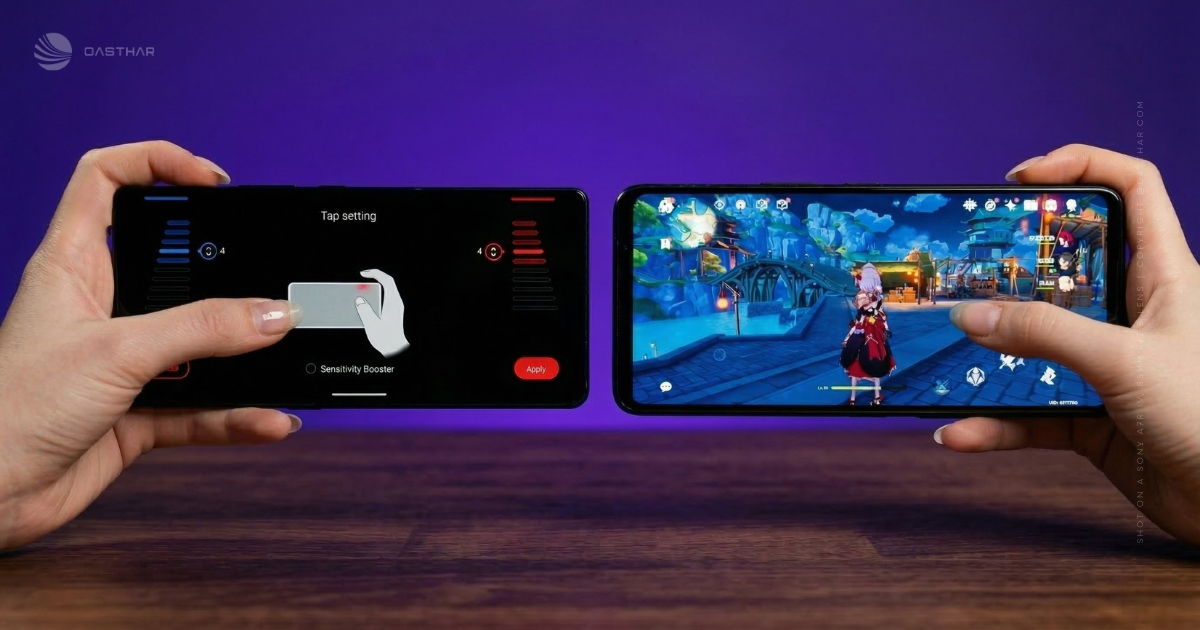
The ROG Phone 9 Pro runs Android 14 out of the box with Asus’ ROG skin and gaming tools like Game Genie and Armoury Crate overlays. You get a lot of knobs to turn, but the review also calls out setup friction, with lots of tutorials and tooltips. Long-term update duration is not clearly stated in the provided excerpt, so you may want to confirm before buying.
Winner: RedMagic 11 Air It’s simpler out of the box, and the provided info is clearer about what updates you should expect.
Connectivity
For gaming, day-to-day connectivity is mostly about accessory support and charging comfort in landscape.
Asus has two clear wins from the sourced specs: a 3.5mm headphone jack (handy for zero-latency audio) and dual USB-C ports, including a side port that makes charging while playing feel less awkward.

RedMagic focuses more on built-in gaming controls and active cooling. In the provided internal notes, you should also plan on no 3.5mm jack, which means Bluetooth or a USB-C adapter.
Winner: Asus ROG Phone 9 Pro The headphone jack and extra USB-C port make wired audio and charging while playing much easier.
Cameras, Mic & Speakers
Gaming phones often treat cameras like the “good enough” checkbox. The RedMagic 11 Air follows that pattern. You get a 50MP main camera with OIS that can look solid in daylight, but the 8MP ultrawide is a clear step down and there’s no telephoto lens. The 16MP under-display selfie camera looks softer because it’s shooting through the screen. For video, it can record at 8K 30fps, yet the source recommends 4K at 30 or 60fps for better stabilization and fewer artifacts.
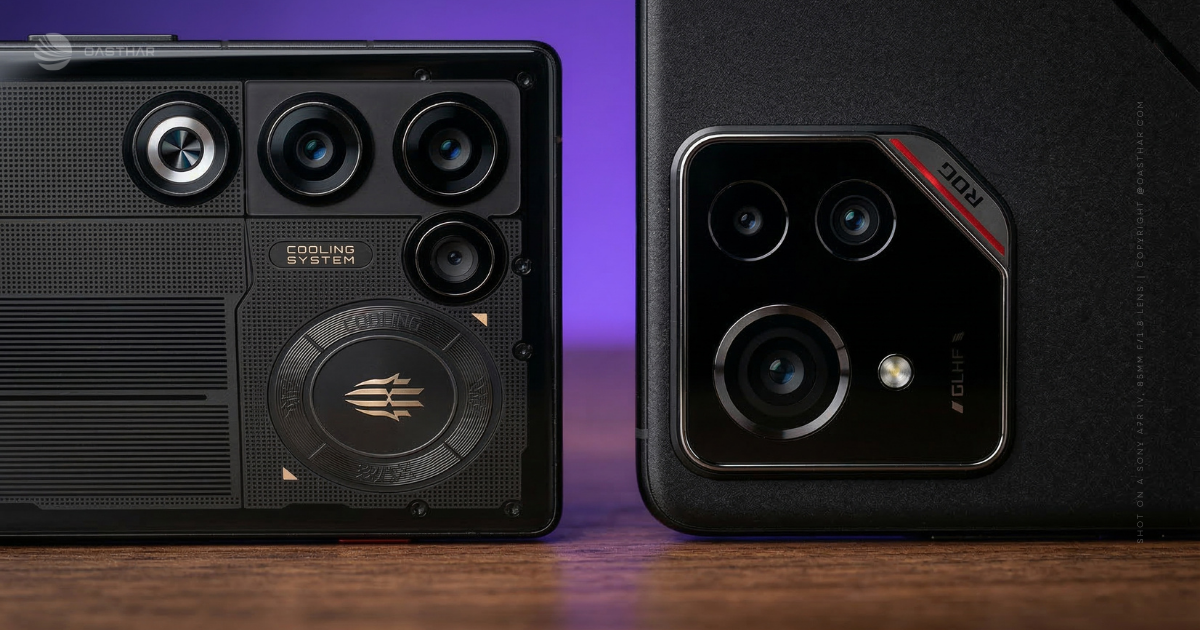
The ROG Phone 9 Pro takes photos more seriously. Tech Advisor lists a 50MP main (Sony Lytia 700), a 32MP 3x telephoto for real optical zoom, a 13MP ultrawide, and a 32MP selfie camera. That setup is simply more flexible if you travel, shoot concerts, or need clean portraits.
On audio, RedMagic can get loud but the thinner body limits bass at high volume. Asus’ stereo setup is also loud and works well for game effects.
Winner: Asus ROG Phone 9 Pro Its camera system is more versatile, especially because you get real optical zoom.
Extra Features
RedMagic’s extras are focused and practical. You get capacitive shoulder triggers, a built-in active cooling fan, and a dedicated gaming mode with tools like resource monitors and screen recording. The side button replaces the old slider behavior, and in the source it defaults to Game Space with a long-press behavior for reassigned functions.
Asus answers with AirTriggers, deep gaming controls, and the optional fun stuff like the AniMe Vision LED matrix on some models. It also has an ecosystem angle, with accessories and controller-friendly design choices that make the phone feel like part of a kit.
Competitive players tend to value stable grip, triggers, and charging comfort. Casual players notice the fun extras and daily convenience first.
Winner: Tie RedMagic wins on built-in cooling value, while Asus wins on premium extras and accessory flexibility.
Price & Value
In the US, the RedMagic 11 Air starts at $499 for 12GB/256GB, and the higher configuration is listed at $599 globally (US pricing can vary). By contrast, Tech Advisor lists the ROG Phone 9 Pro at $1,199.99 before tax, and the Pro Edition at $1,499.99 before tax. Real-time price tracking in February 2026 also suggests deals can drop the ROG closer to $1,000 to $1,200, but it’s still a big gap.
Two quick math examples make the choice clearer:
- If you buy the RedMagic, you can add a controller or better earbuds and still stay well under the Asus price.
- If you buy the Asus, you’re paying extra for the camera stack, wireless charging, extra ports, and a more polished “only phone” experience.
For additional category context, this older but still useful gaming-phone comparison helps frame what tends to matter most to buyers: ROG vs RedMagic buyer trade-offs.
Winner: RedMagic 11 Air It delivers flagship-level speed for far less cash, even after you budget for accessories.
Who is it for?
Choose the RedMagic 11 Air if:
- You want the lowest-cost gaming power with a flagship-class chip.
- You want a huge battery and fast wired charging for long sessions.
- You like a true full-screen display with no punch-hole.
- You can live with basic cameras and no wireless charging.
Choose the Asus ROG Phone 9 Pro if:
- You want better cameras, including a real 3x telephoto.
- You want wireless charging for desk and nightstand habits.
- You want wired gaming comfort, thanks to the headphone jack and extra USB-C port.
- You want a premium all-rounder that also happens to game extremely well.
Winner: Tie The right choice depends on budget, plus how much you care about cameras and premium extras.
FAQs
Which phone gives you better gaming performance day-to-day?
You get flagship speed on both because each uses Snapdragon 8 Elite. In longer sessions, RedMagic’s built-in fan and vapor chamber help sustain performance, but heat can still reach your hands.
Which one lasts longer for gaming, travel, and daily use?
RedMagic 11 Air usually lasts longer because it packs a 7,000mAh battery and 80W wired charging (charger included). ROG Phone 9 Pro runs 5,800mAh, still strong.
Which display is better for fast shooters and MOBAs?
ROG Phone 9 Pro wins for pure smoothness because it can reach 185Hz (settings dependent) and has very high touch responsiveness. RedMagic tops out at 144Hz.
Which phone is easier to use while charging in landscape?
ROG Phone 9 Pro makes charging while gaming easier because it has a side USB-C port and a second USB-C. That setup keeps cables out of your grip.
Which one takes better photos for a gaming phone?
ROG Phone 9 Pro is the safer pick because it adds a 3x telephoto and a 32MP selfie camera. RedMagic 11 Air’s cameras are usable, but reviews call them a weak spot.
Which is tougher for water, dust, and everyday accidents?
ROG Phone 9 Pro is better protected with an IP68 rating. RedMagic 11 Air is IP54, partly because its cooling fan needs an air intake and exhaust opening.
Which phone is the better buy if you hate overpaying?
RedMagic 11 Air is the value play, it undercuts premium gaming phones while keeping a top-tier chip, a huge battery, and shoulder triggers. You trade away extras.
Do you get headphone jack, triggers, and gaming controls?
ROG Phone 9 Pro keeps a 3.5mm jack and capacitive AirTriggers, plus gaming overlays. RedMagic 11 Air also gives you shoulder triggers and a dedicated game mode key.
Final Verdict
If you want the best gaming value, buy the RedMagic 11 Air and put the savings into accessories. You’re getting a huge battery, a fast chip, a great 144Hz panel, and wired charging that fits a play-and-top-up routine.
If you want a more complete daily phone, the ROG Phone 9 Pro just covers more bases, especially cameras, charging options, and ports. For most people, the RedMagic is the smarter spend, but the Asus makes sense if you’ll use its extras every day. RedMagic 11 Air vs Asus ROG Phone 9 Pro is basically a choice between “smart bargain” and “no-compromises kit.”
Winner: Tie You win by choosing the phone that matches your top 2 priorities.